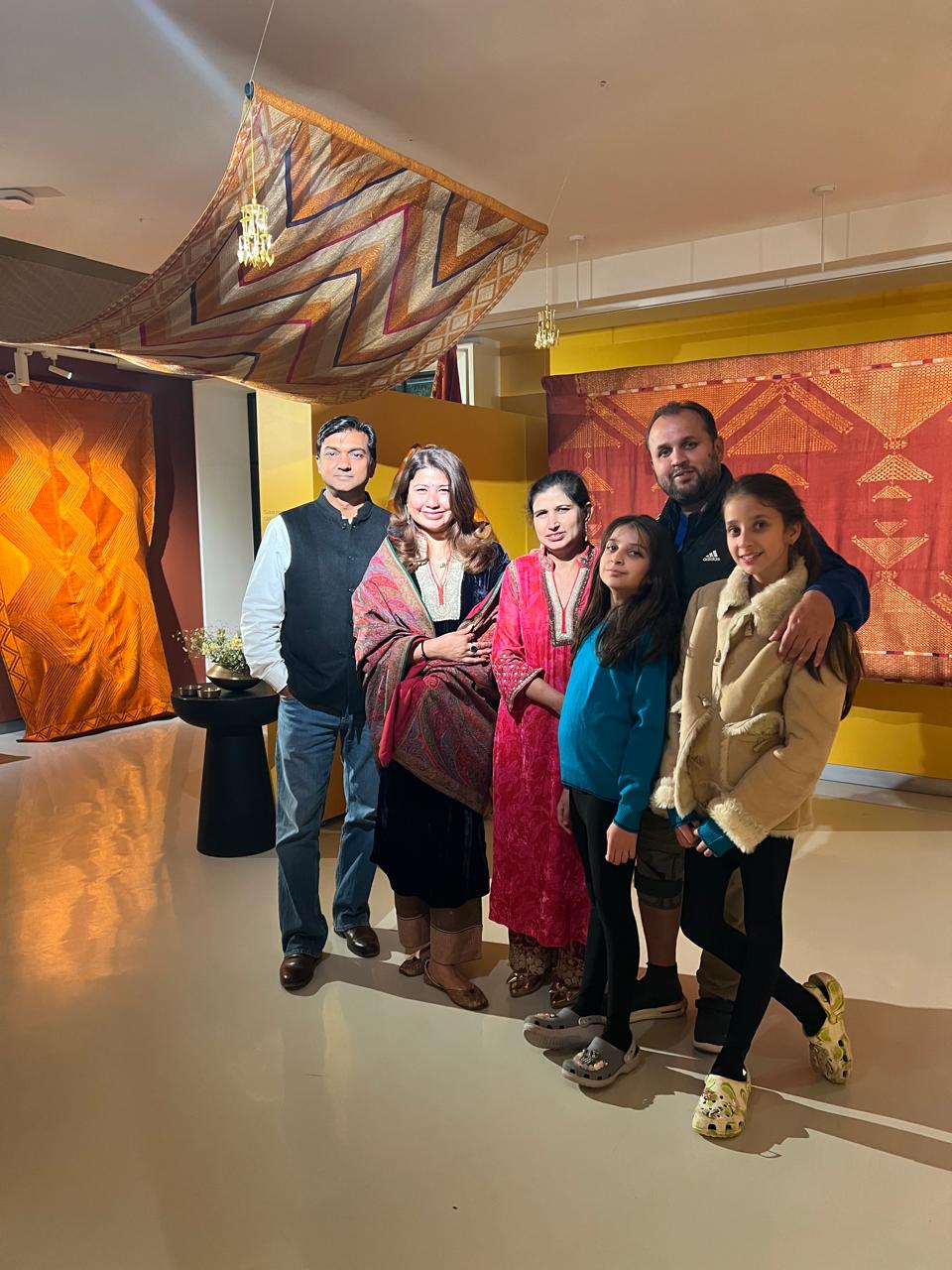
Curated by Shreya Sharma
All Day Preview: 27 December 2025 | 12- 7 PM
On View Till: 26 January 2026 | 11 AM – 7 PM
Venue: LATITUDE 28 | B-74, Ground Floor, Block B, Defence Colony, New Delhi 110024
Open on Sundays: 4 January 2026 Onwards
The exhibition journeys through the arc of human experience: birth, love, community, ritual, and remembrance, through the many forms of Pre-Partition Phulkaris and Baghs of Punjab.
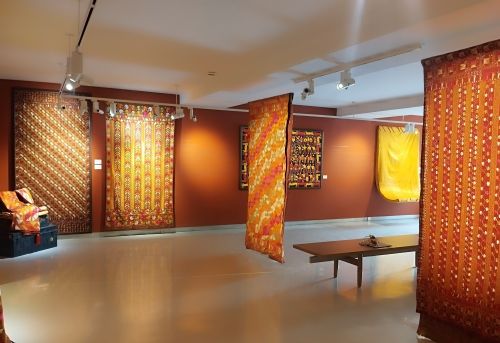
Taking its title from the folk verse, “Sut te saah ne rachan meri kahāṇī, Phulkari de phullāñ vich likhi zindagānī” (Thread and breath have woven my story; in the flowers of Phulkari, my life is written), the exhibition showcases over 30 rare Pre-Partition Phulkaris and Baghs from the private and family collections of designer Amit Hansraj and Brig. Surinder & Shyama Kakar. This landmark display marks one of the first major exhibitions of Phulkaris and Baghs in a private gallery in India. Here, Phulkari is viewed not merely as embroidery, but as a living archive; stitched by women whose stories rarely entered formal histories. Bringing together sacred, domestic, ceremonial, and utilitarian expressions of the tradition, including Chope, Vari-da-Bagh, Sainchi, Baghs, and Thirma Phulkari, the exhibition reveals how this practice has served as a quiet yet powerful record of women’s inner worlds.
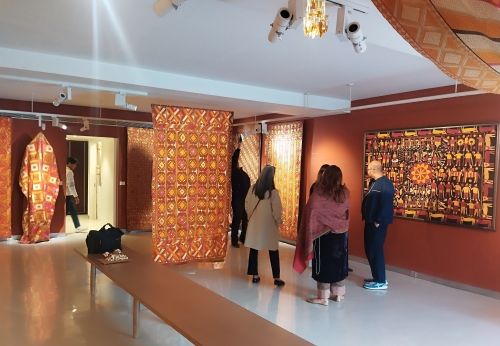
Sut te Saah brings these pieces together alongside the boliyan that once filled the spaces where women embroidered: songs of joy, teasing, grief, celebration and faith. For me, this exhibition is a way of honouring their labour, their humour, their resilience and their artistry. It is a reminder that behind every Phulkari is a woman who wove not just thread, but a piece of her life into cloth.
As I spent time with these Phulkaris, it became clear that this was not a collection organised by type or rarity, but by lived experience. Each textile carried intimacy of hands, households and relationships and it was this emotional density that compelled me to shape the exhibition as a life-world rather than a taxonomy. Phulkari carries the breath of its makers. These textiles were never just decorative; they were a way for women to speak, to remember, to hope, to pray.
– Shreya Sharma
This exhibition begins at home.
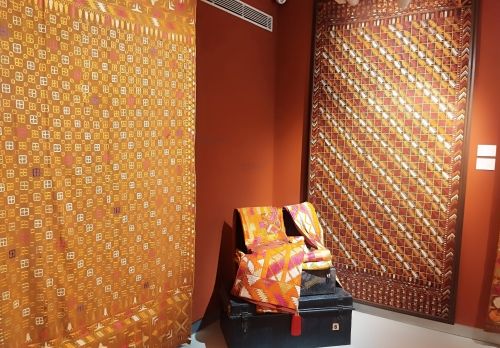
Long before I understood Phulkari and Bagh as history or craft, they lived in my world as intimate presences, folded carefully, brought out on special days, handled with reverence. Some were worn, some preserved, some quietly transformed. They belonged to my mother, and to the women before her: the women of the Sabharwal–Bhasin family and then passed on to my mother Shyama Bhasin-Kakar. They travelled and stayed with her through the many moves of her life as an Armed Forces wife.
The women of the family stitched these Phulkaris and Baghs without claim or authorship. In their hands, cloth became a language; one that carried joy and worry, ceremony and survival, seasons and belief. Each piece held time, patience, and a form of knowledge that rarely needed words. My mother did not inherit these Phulkaris and Baghs as possessions. She inherited them as a responsibility. She kept them without display or explanation, allowing them to remain what they were meant to be, vessels of care, ritual, and continuity. Through her, I learned that heritage is not owned; it is held, protected, and passed forward.
Over time, borders cut through this language. Industrial dyes replaced the slow intelligence of land and hand. The stitch faded not because it lost meaning, but because the worlds that sustained it were fractured. And still, it endured and was remembered from a Nani’s trunk, repeated from memory rather than pattern, beginning again through hands that never forgot.
Born of soil and season, coloured by turmeric, madder, indigo and marigold, Phulkari carries the wisdom of land and time, asking for slowness where speed now dominates. Sut te saah, every stitch here is a gesture of care. Every motif is a memory passed hand to hand. And at the centre of it all is my mother, who taught me that legacy lives not in grandeur, but in continuity.
– Bhavna Kakar


Appreciate it for all your efforts that you have put in this. very interesting information.