Global Literary Dialogues Flourish at NDWBF 2026: France, Poland, Austria, Ukraine and Qatar in Spotlight
From Compassion to Courage: NDWBF 2026 Brings Nobel Laureates, International Dialogues and India’s Military Heritage Together
New Delhi, January 14, 2026: Day five of the New Delhi World Book Fair 2026 opened with a strong international focus, as the International Pavilion hosted thought-provoking conversations on literature, diplomacy and the future of books. Polish Ambassador to India, H. E. Mr Piotr Świtalski, reflected on the role of literature in fostering cross-cultural understanding, while Ambassador of France to India, H. E. Mr Thierry Mathou, joined a discussion on the future of books in a changing global reading landscape.
Among the dignitaries who visited the book fair today were Shri N Indrasena Reddy, Hon’ble Governor of Tripura, Hon’ble Justice Atul S. Chandurkar, Nobel Laureate Shri Kailash Satyarthi, former Union Minister Dr Ramesh Pokhriyal ‘Nishank’ and former Union Minister Shri Vijay Goel.
Global Conversations on Books
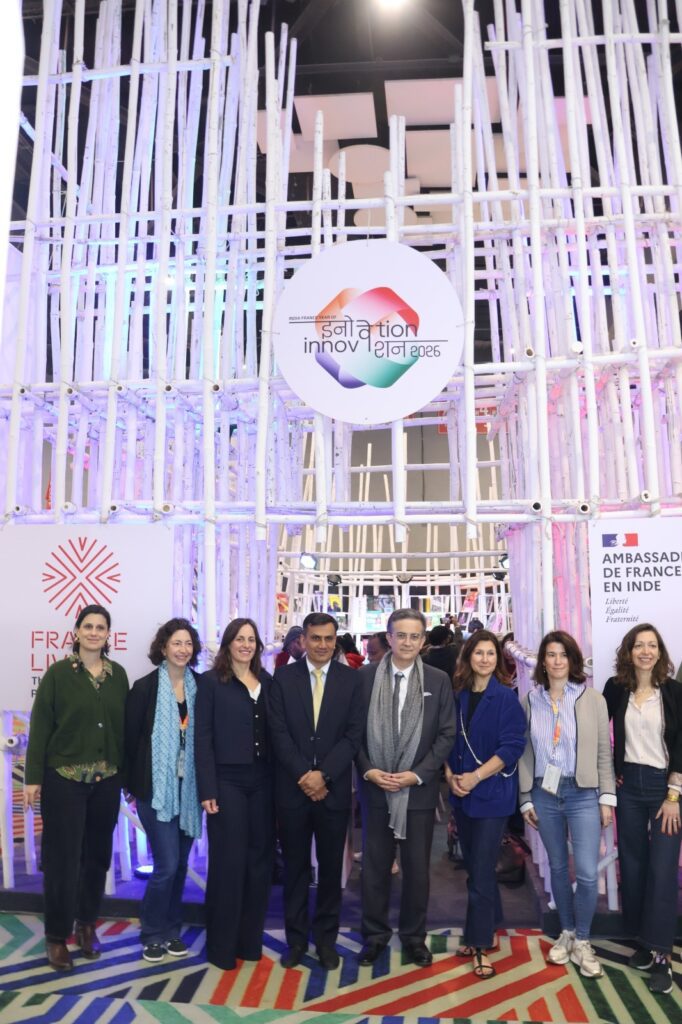
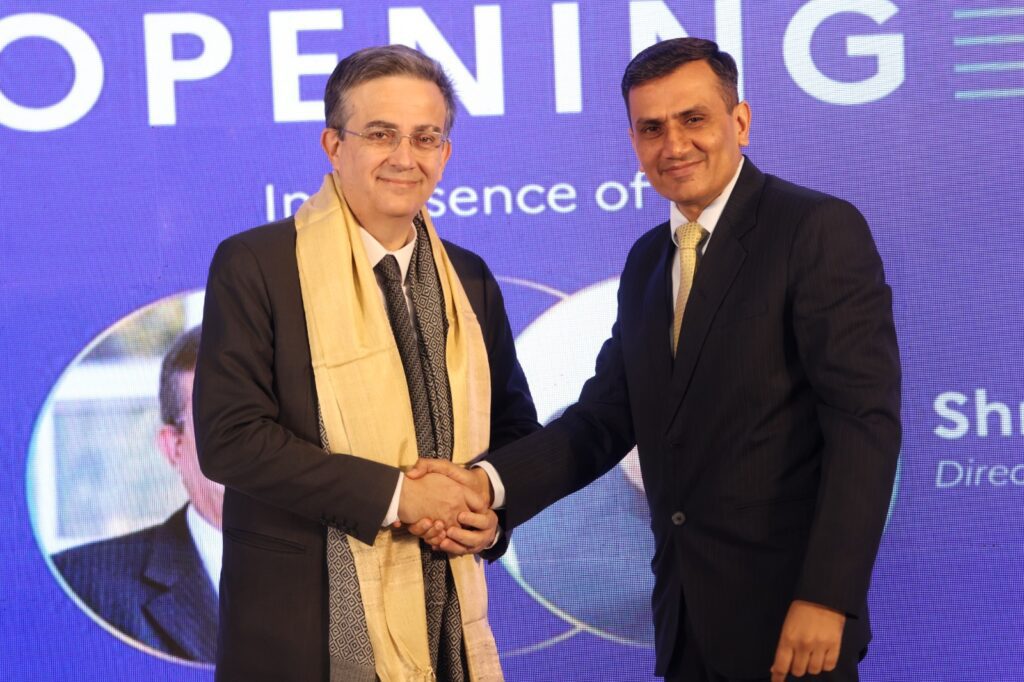
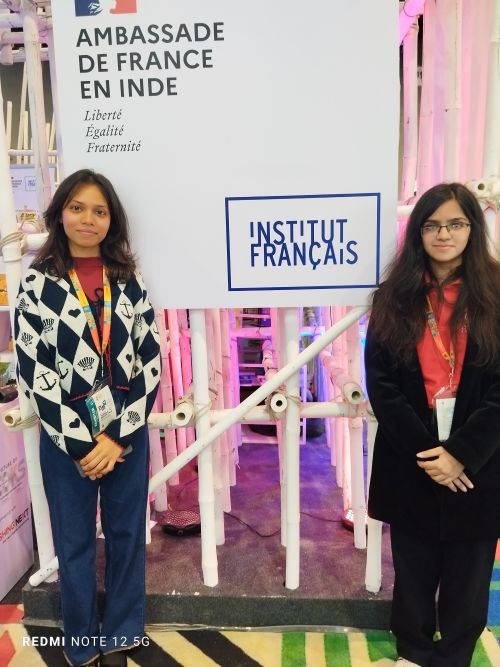
At the International Events Corner of NDWBF 2026, France took centre stage with the opening of the French Pavilion under the India–France Year of Innovation 2026. The pavilion, inspired by the architecture of Notre-Dame Cathedral and constructed using bamboo, stood as a symbol of creativity, sustainability and cultural dialogue. The session The Future of Books featured a conversation between H.E. Mr Thierry Mathou, Ambassador of France to India, and Shri Yuvraj Malik, Director, National Book Trust, India, focusing on the evolving landscape of publishing, innovation in reading practices and the role of international collaboration in shaping the future of the book ecosystem.
Another highlight was ‘A Dialogue on Books and Literature’ with H. E. Piotr Switalski, Ambassador of Poland. The Ambassador said Poland like India has been partitioned thrice and it was through their literary traditions that they kept their secular identity alive which eventually led to the recognition of the Polish State. He also spoke of Rabindranath Tagore’s writings as a link between the two nations and their shared historical and social histories when it comes to formation of statehood.
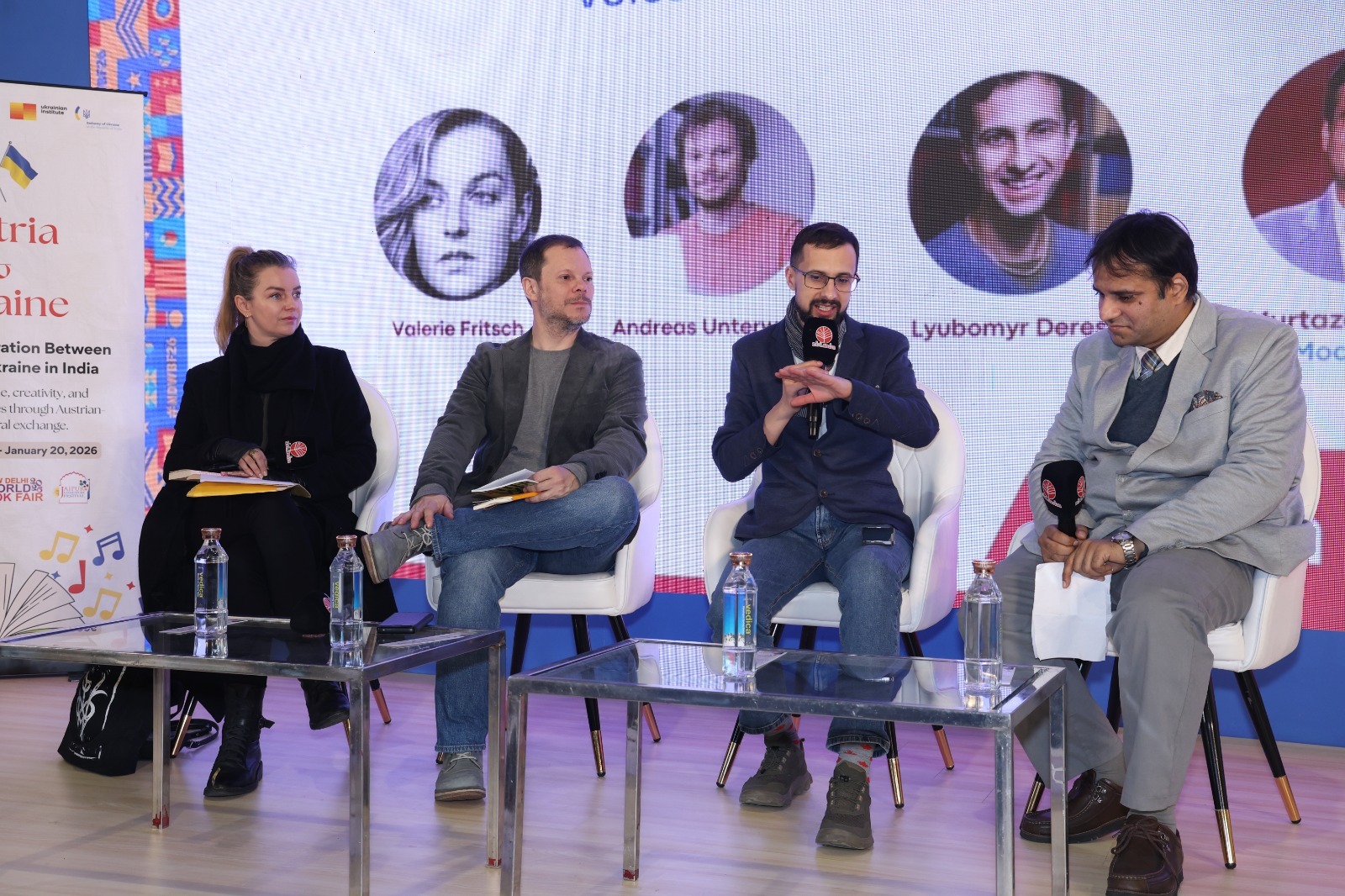
An Austria–Ukraine collaboration, today’s panel brought Austrian authors Valerie Fritsch, Andreas Unterweger and Ukrainian author Lyubomyr Deresh together to reflect on literature amid conflict and uncertainty. Moderated by Murtaza Ali Khan, the session also felicitated Ukraine’s Ambassador, H.E. Dr Oleksandr Polishchuk, highlighting renewal, resilience and dialogue across borders in Europe. Mr. Mohammed Al Bloshi, Expert on Qatari Cultural Heritage, delivered a presentation highlighting the cultural and historical ties between India and Qatar.
Kailash Satyarthi’s 3D Vision For Youth
Nobel Peace Laureate and social reformer Kailash Satyarthi led a deeply reflective session on the power of compassion, speaking on his forthcoming book Karuna: The Power of Compassion and his recently published autobiography. Drawing from decades of social engagement, he introduced the idea of Compassion Quotient (CQ) as a vital human measure that goes beyond Intelligence Quotient (IQ) and Emotional Quotient (EQ). Explaining compassion as a continuum of awareness, emotional connection, depth of feeling and responsible action, he emphasised that CQ is not an abstract virtue but a learnable and actionable life skill. Addressing young audiences, he spoke about the fragility of modern relationships and the urgent need for empathy, responsibility and respect, concluding with his inspiring 3D mantra for life (Dream big, Discover one’s potential, and Do it now) urging youth to transform compassion into purposeful action.
Guardians of the Seas
A focused session at the Theme Pavilion highlighted the Indian Navy’s historic role in the Liberation of Goa and its evolving responsibilities in maritime security. Lt. Jeetvitesh Saharan spoke about the Navy’s decisive contribution during the 1961 Liberation of Goa, describing Operation Chutney as a swift and strategic naval action completed within hours, underscoring the precision and preparedness of Indian forces. In the contemporary context, Lt. Commander Anupama Tapliyal addressed the Navy’s role in tackling modern maritime threats, including piracy, smuggling, drug trafficking, and terrorism. She elaborated on Operation Sankalp (2019), which focuses on anti-piracy patrols and safeguarding merchant vessels.
In another session, a panel on the 1947–48 Jammu and Kashmir Operations, moderated by Maj. Gen. Jagatbir Singh, examined the circumstances leading to India’s first war after Independence. Lt. Gen. G.S. Katoch explained Maharaja Hari Singh’s initial choice of independence, Pakistan’s Operation Gulmarg, and the subsequent signing of the Instrument of Accession that led to the airlifting of Indian troops to Srinagar. Col. Ajay K. Raina highlighted the violation of the Standstill Agreement by Pakistan, early military constraints, and the crucial role of Indian and Gurkha units. The panel traced key phases of the war, including Poonch, Ladakh, Skardu, and the decisive Battle of Zojila, which secured Ladakh and shaped the enduring legacy of the conflict.
Day 5 at Kidz Express, the Children’s Pavilion at NDWBF 2026, unfolded as a delightful blend of learning and imagination, with an international storytelling session “One Day in Kazan.” Young audiences were also transported across borders by Russian author Alena Karimova, who brought the sights, stories, seasons, and cultural rhythms of Kazan to life. In the evening, the Indian Navy Band delivered an electrifying performance that infused the venue with energy, captivating audiences with a dynamic blend of sound and rhythm.


I do like the manner in which you have framed this specific situation and it really does provide me personally a lot of fodder for thought. However, because of just what I have experienced, I only hope when the actual feedback pack on that people today keep on issue and don’t get started on a tirade involving the news du jour. Anyway, thank you for this superb piece and although I do not really concur with it in totality, I value your perspective.