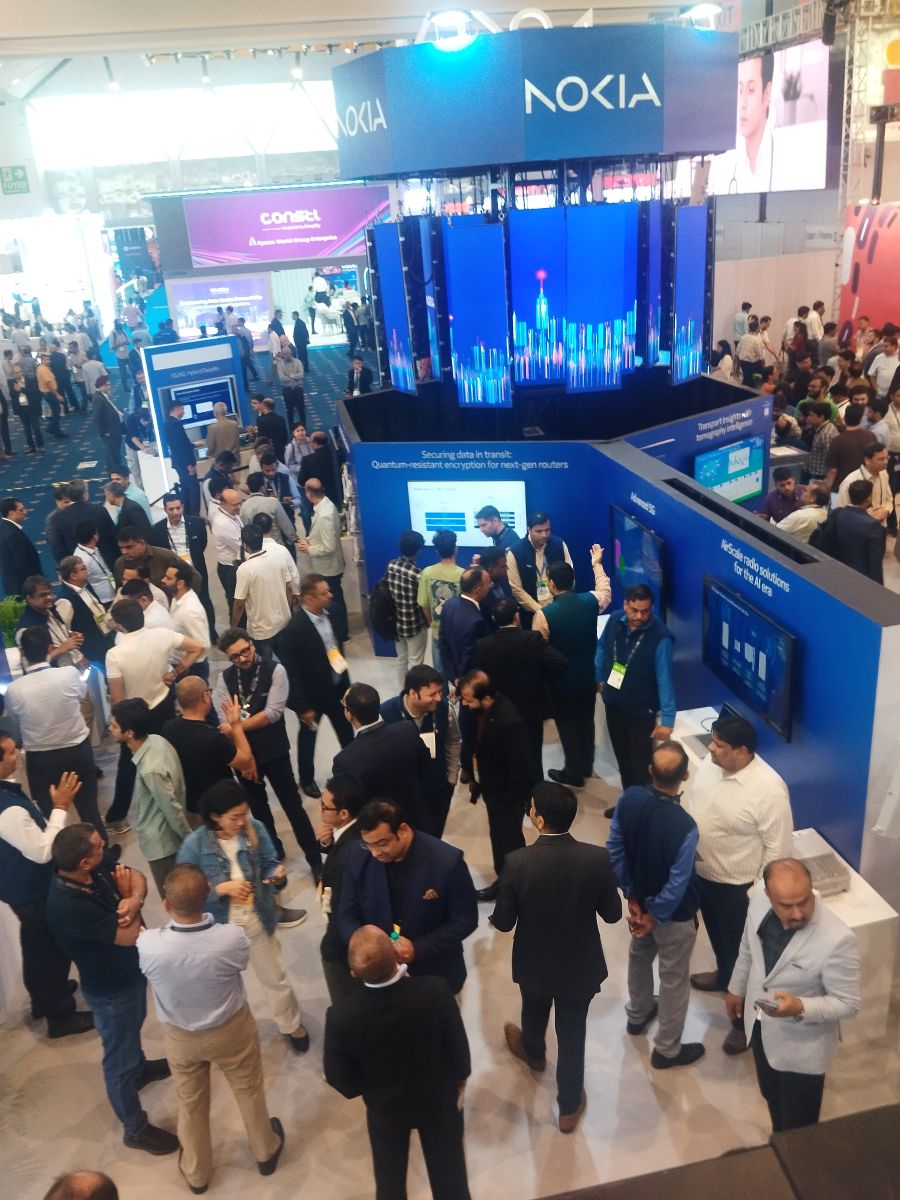
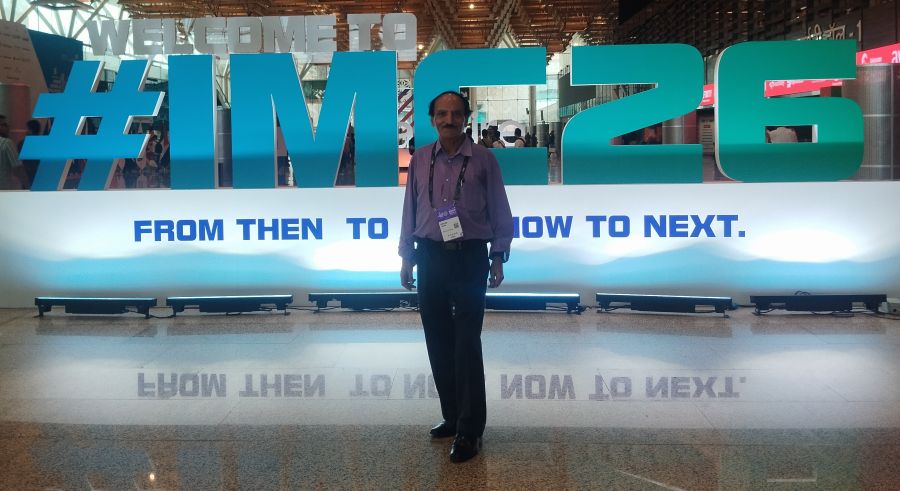
As the 10th edition of India Mobile Congress (IMC) 2026 gathers pace at Yashobhoomi, the forum is setting the tone for the rest of days ahead, under the theme “Scale Without Boundaries”. Global technology leaders, telecom operators, standards bodies and policymakers converged on one message: the conversation has moved beyond expanding connectivity to embedding intelligence in the network itself, shaping 6G through global standards, and building in India for the world.
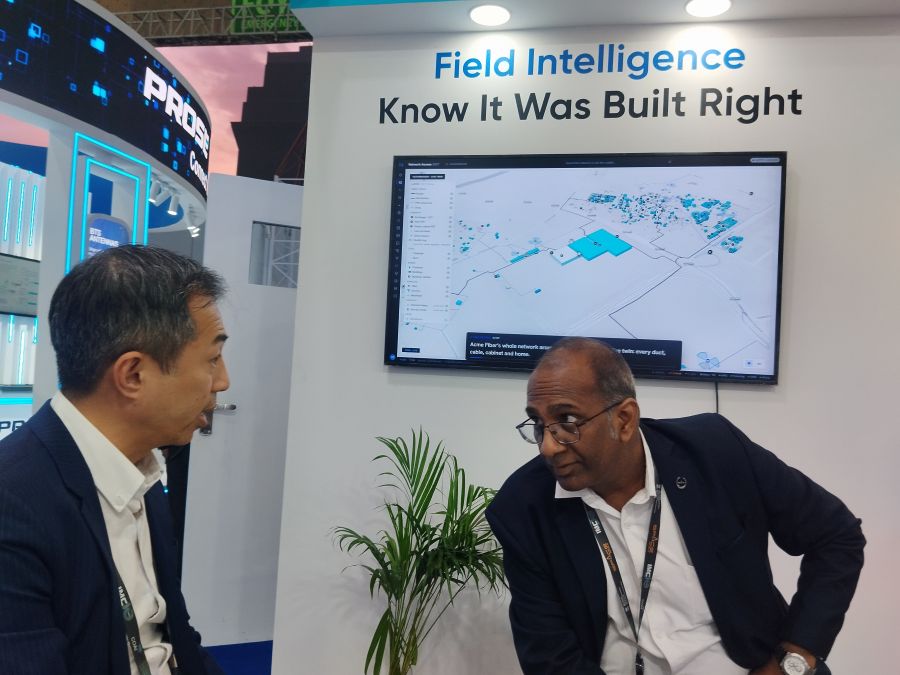
Here is what leaders from across the ecosystem had to say:
AI-Native Networks and Intelligent Infrastructure
Andres Vicente, CEO South-East Asia, Oceania and India, Ericsson
“India has built a strong foundation for the next phase of its digital journey through rapid 5G adoption and continued investment in advanced networks. The transition to 5G Standalone will make networks more programmable and capable of delivering differentiated connectivity, creating the platform for new use cases powered by AI and, ultimately, the evolution towards 6G. At Ericsson, we are proud to be a long-standing technology partner to India and to be deepening our capabilities here. India is not only a key market for us, but increasingly an important hub for innovation and advanced technology development for the world.”
Vivek Badrinath, Director General, GSMA
“India has built robust digital foundations. It has one of the world’s largest connected populations, a huge technology ecosystem and an exceptional pool of talent. So the question is no longer about how many people we can connect, but what more than a billion connected people and businesses can do with it. AI will be a major part of what comes next. We need to talk about compute, models, data and skills, but it also depends on making our networks more intelligent, programmable and capable of supporting an AI economy.”
Etienne Chaponniere, ISAG Chair, Qualcomm
“AI can become the new user interface, and that will fundamentally change consumer behaviour. As phones and other devices become more capable of understanding our surroundings and processing the data around us, we cannot simply send all that data back to the network. That would require enormous amounts of bandwidth, power and network-side computing. We will therefore need to process much more information on the device before sending it to the network. There is also a strong economic reason for this: when computing and context interpretation happen on the device, the consumer bears the cost of the device’s computing resources, rather than the cloud. This shift will have important implications for how we design and standardise future networks.”
Erik Ekudden, SVP & Group CTO, Ericsson
“As AI moves beyond traditional consumer applications into physical AI, enterprise use cases and mission-critical applications, networks will need to become more intelligent, programmable and context-aware. This is where the concept of an ‘intelligent fabric’ becomes critical—bringing together connectivity, cloud, edge computing and AI to deliver the right performance, latency and network capabilities wherever they are needed. India’s strong 5G ecosystem and scale position it well to hape the next generation of network innovation and the transition towards 6G.”
Giacomo Robustelli, Head of European Affairs & Economic Studies, TIM
“AI is often presented as a software revolution, but I believe it is also an infrastructure revolution. Every new AI application generates demands for more connectivity, more computing, more storage and more security. The real equation is AI equals networks, cloud, data centres, security and models. If any one of these layers fails to scale, AI itself cannot scale. The scale of intelligence will depend on the scale of infrastructure. Before scaling intelligence, we must scale the infrastructure that scales intelligence. Ultimately, building the future at scale also means building trust at scale.”
6G and Global Standards
N. G. Subramaniam, Chairman, Bharat 6G Alliance
“6G is not just about being faster; it is about reimagining connectivity and making networks more intelligent. In the AI era, people will consume knowledge just as they consume data, with knowledge being shared, created and upgraded intuitively, interactively and instantaneously. Communications and AI will evolve together to define the next generation of experiences and industrial opportunities. The realisation of 6G in India is being undertaken in mission mode, with sustained government support and strong industry participation in R&Dand innovation.”
Dr Youn Sun Kim, 3GPP RAN Chair, Samsung Korea
“There is a big differentiation in the needs shown by different regions, and I think one thing that 3GPP should focus on is how to come up with a common framework that can embrace this diversity in global markets. The intention is to come up with a harmonised framework that can embrace all the requirements in different regions and different operators. As we move towards 6G, we are looking at energy efficiency and sustainability, spectral efficiency, coverage, diverse device types, spectrum utilisation and operations, and a harmonised design for terrestrial and non-terrestrial networks. The goal is to develop 6G standards that can address these diverse requirements while enabling global collaboration.”
Shyam Prabhakar Mardikar, President and Group CTO (Mobility), Reliance Jio
“The convergence of compute with connectivity is going to redefine what telcos of the future will be. The network is not only connecting people now; it is also enabling people with intelligence, knowledge and awareness. The convergence of technology and user interfaces is going to fundamentally change how people learn, interact and consume information. 6G is not about capacity, coverage or faster speeds. It is about enabling insights in a very personalised and intuitive way, so that individual, organisational, societal and government actions are linked towards a larger goal.”
Operators: Automation, Experience and Value Creation
U.K. Srivastava, President – Regulatory Policy, Reliance Jio
“The ROI from zero-touch networks is particularly significant in a market like India, where telecom networks operate at enormous scale and even a brief disruption can impact millions of customers and billions of transactions. The priority is, therefore, not just cost optimisation, but ensuring network uptime and preventing incidents from becoming service outages. By moving from a reactive ‘detect and respond’ model to predictive maintenance, operators can identify issues early, take corrective action remotely and minimise customer impact. As networks become more complex, intelligent automation will be critical to improving reliability, workforce productivity and operational efficiency at scale .”
Nirmesh Yadav, Emerging Technology and Industry Alliance, Bharti Airtel
“Quality of experience is a key driver for 5G monetisation. From a user’s perspective, it is not about how much speed they get; it is whether they can take an office conference call without interruptions or have a video call without issues. Quality of experience is an end-to-end metric, and some aspects are outside an operator’s domain. We need to work together and better understand the user and the application. Everybody will have to take ownership and responsibility for the component they are delivering to the complete solution.”
Dr. Rajkumar Upadhyay, CEO at C-DOT
“India’s manufacturing growth has been driven by supportive government policies and the strong efforts of the private sector. As we move forward, the focus needs to shift towards creating greater value through design, intellectual property and equipment made in India. The PLI schemes have played an important role in supporting this growth, while start-ups have the talent and capability to contribute significantly to the next phase of development. India needs to invest further in security, quality, AI and cybersecurity to build a stronger presence in the global market and create greater value beyond manufacturing.”
Carl Cruz, CEO, Globe Philippines
“The customer experience is moving away from the network itself. At the end of the day, what matters is what the technology or the network really enables – speed, simplicity, governance, trust, and, more importantly, whether it allows people to participate in the digital economy. We have been great at enabling the digital economy, but we now need to get better at capturing the value it creates. That is the shift we all need to make.”
Enterprise and Industrial AI, and Network Integration
Elena Fersman, Vice President and Head of Global AI Accelerator, Ericsson
“As AI advances across factory environments, the AI operating on the factory floor and within the network will need to understand each other’s intent and interact seamlessly. The interface between AI operating at the application layer and AI within the network is becoming increasingly broad. The two domains will increasingly bridge with each other, while the network will play a key role in mediating how intelligence is transferred and managed.”
Archana Vemulapalli, Partner and Global Head of Al Product Management and Strategic Relations, Goldman Sachs
“The real opportunity lies not simply in adopting AI, but in building the organisational agility to scale it responsibly and effectively. Organisations that can simplify decision-making, empower teams to experiment and build the right foundations for AI will be better positioned to adapt as the technology evolves. The ability to be nimble in adoption, while staying focused on business outcomes, will be critical to turning AI potential into sustained impact.”
Sandeep Agrawal, Head of Products & Platforms, Network Solutions and Services, TCS
“Over the past 25 years, the telecom industry has evolved to a highly complex, multi-vendor environment, involving multiple generations of technology, OEMs, software platforms and operating systems. As we move towards intelligent RAN, this complexity is only set to increase, with more AI-based software and software-defined equipment becoming part of the network ecosystem. In this environment, the role of a neutral system integrator becomes even more critical—to bring structure to this complexity, enable interoperability across diverse technologies and ensure that the different components work together seamlessly. This is where system integrators can play an increasingly important role in shaping the next phase of telecom network evolution .”
Dr. Rajkumar Upadhyay, CEO at C-DOT
“India’s manufacturing growth has been driven by supportive government policies and the strong efforts of the private sector. As we move forward, the focus needs to shift towards creating greater value through design, intellectual property and equipment made in India.The PLI schemes have played an important role in supporting this growth, while start-ups have the talent and capability to contribute significantly to the next phase of development. India needs to invest further in security, quality, AI and cybersecurity to build a stronger presence in the global market and create greater value beyond manufacturing.”