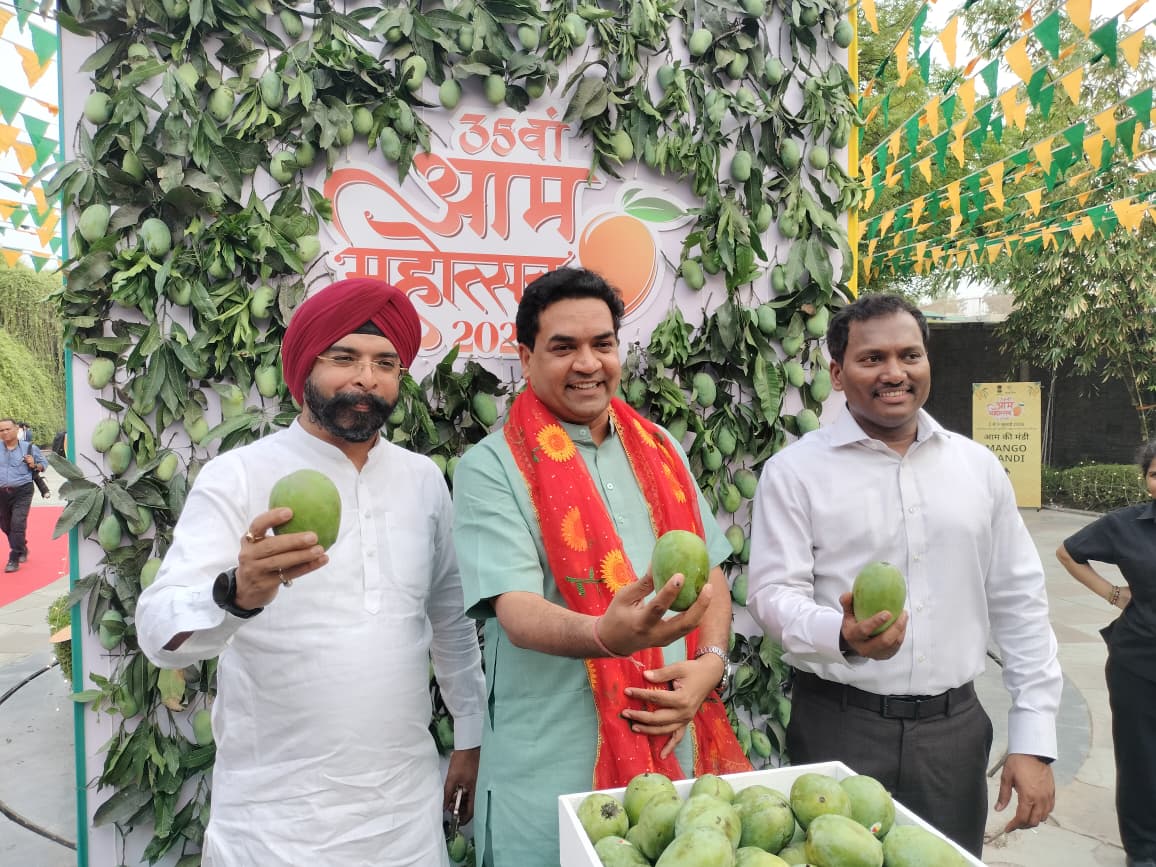
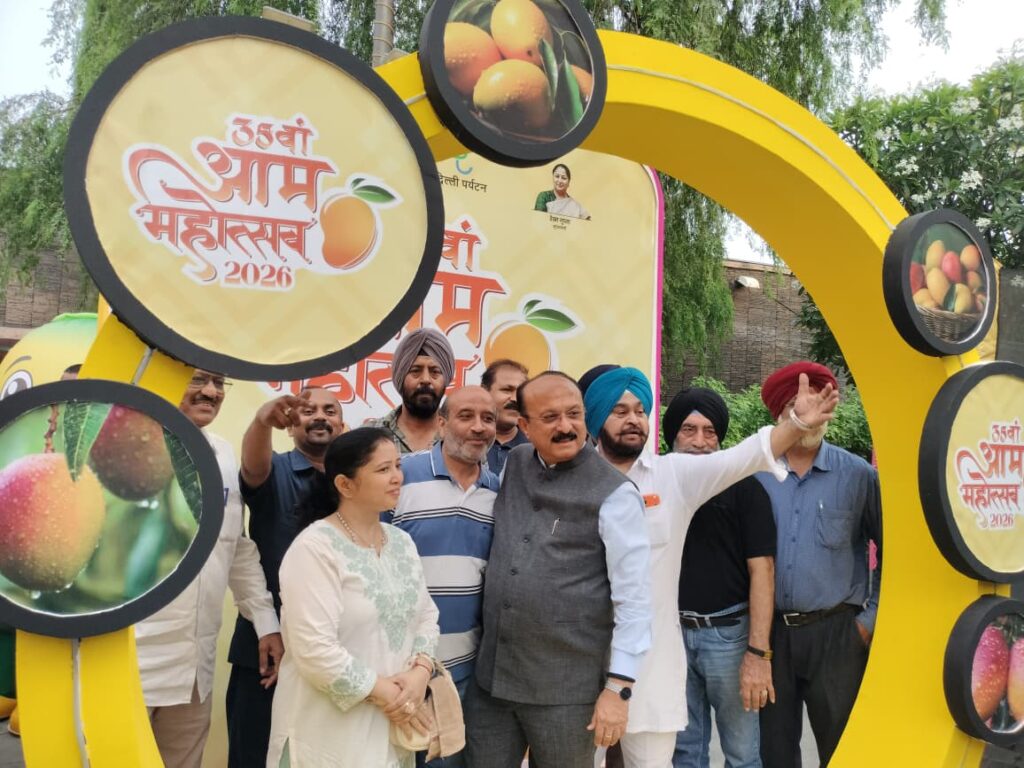
The 35th Mango Festival was inaugurated today by Hon’ble Mrs. Rekha Gupta, Chief Minister of the Government of Delhi. The inaugural ceremony was attended by Hon’ble Tourism Minister Shri Kapil Mishra, Hon’ble Education Minister Shri Ashish Sood, Hon’ble Environment Minister Shri Manjinder Singh Sirsa, Shri Sunil Anchipaka, Managing Director, Delhi Tourism, along with several distinguished guests.
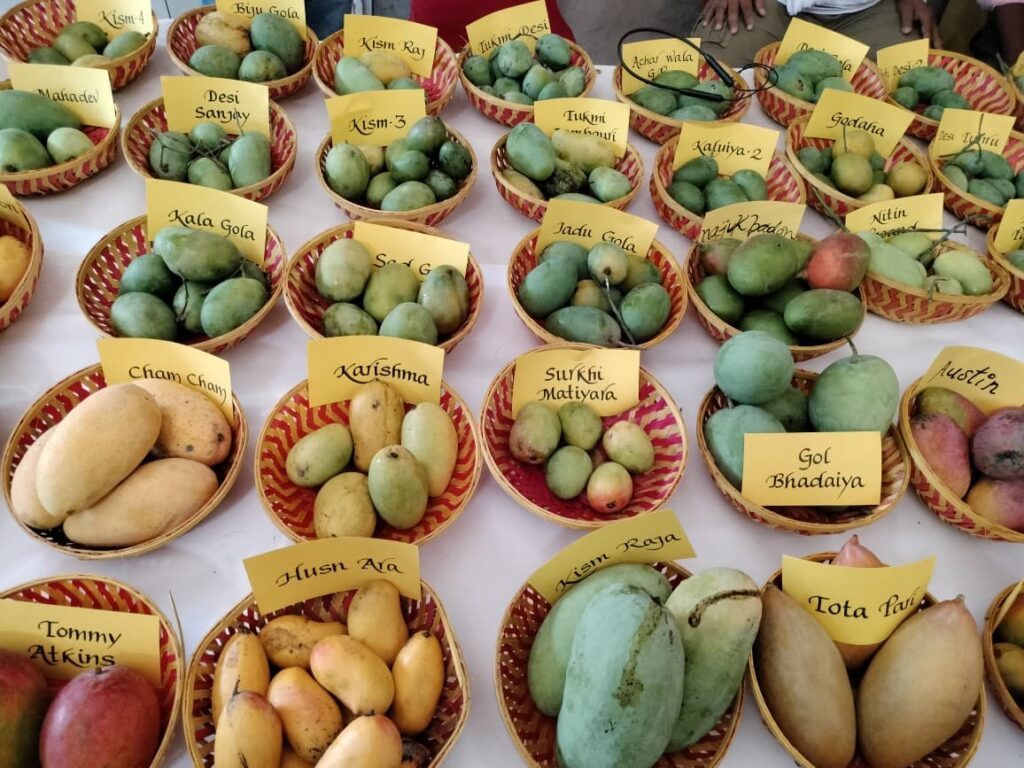
Delhi Tourism has been organizing the Mango Festival annually since 1987. The festival showcases numerous rare and premium varieties of mangoes, including Husnara, Ratol, Ramkela, Kesar, Mallika, Amrapali, Litchi, Fazli, Hathi Jhool, and many others. Visitors can also witness mangoes ranging in size from that of grapes to papayas, making the exhibition a unique attraction.
The primary objective of the Mango Festival is to provide a common platform for both small and large mango growers and exporters. It also aims to encourage the cultivation of diverse mango varieties and promote mangoes as well as value-added mango products.
The annual festivals and fairs organized by Delhi Tourism have consistently been appreciated for their significant contribution to promoting tourism in the National Capital.
Mangifera indica, the scientific name for the mango, has captivated people for centuries. It is widely believed that the mango originated in the Indian subcontinent many centuries ago. Today, the fruit enjoys immense popularity not only across India but also internationally.
The ancient Ayurvedic text Charaka Samhita describes the medicinal value of the mango tree and its fruit, noting its usefulness in alleviating ailments such as vata disorders, kapha disorders, diarrhoea, and dysentery. Mangoes are also rich in carotene, which helps fulfil the body’s requirement for Vitamin A.
The classical Sanskrit work Abhijnanasakuntalam by Kalidasa vividly and poetically describes mango groves during the spring season. The renowned Sufi saint and poet Amir Khusrau also expressed his admiration for the mango in his writings. It is believed that Emperor Akbar had one lakh (100,000) mango trees planted near Darbhanga in Bihar, an orchard that is still known today as Lakhi Bagh.
As in previous years, the 35th Mango Festival has brought together traditional mango growers, government institutions, and non-governmental organizations. Major participating institutions include:
ICAR–IARI, Pusa
ICAR–Central Institute for Subtropical Horticulture (CISH), Lucknow
G.B. Pant University of Agriculture & Technology, Pantnagar
Directorate of Horticulture, Uttar Pradesh
Chaudhary Charan Singh Haryana Agricultural University, Hisar
Bihar Agricultural University, Sabour (Bhagalpur)
Purani Nursery, Nizamuddin
Kadam Chandan Nursery
Society for Conservation of Diversity
Awadh Agritech, Malihabad
Fauji Farm & Nursery
Participating growers include Shibu (Ambarpur), Revati (Biswan), Mohammad Museeb (Khairpur), Rambir Singh Chauhan (Saharanpur, Uttar Pradesh), Subodh Kumar (Saharanpur), Akhlaq Ali (Uttar Pradesh), Mohammad Shahid, Mohammad Junaid, and several others.
The festival offers visitors a unique opportunity to view and purchase mangoes of different varieties, shapes, and sizes under one roof. Fresh mangoes, mango-based products, and mango saplings are also available for purchase. One of the major attractions of the festival will be the Men’s Mango Eating Competition, scheduled for tomorrow.
The Mango Festival will continue until 9:00 PM on 5 July 2026.
To facilitate visitors, Delhi Tourism has arranged a complimentary shuttle service between Tilak Nagar Metro Station and the festival venue throughout the event.