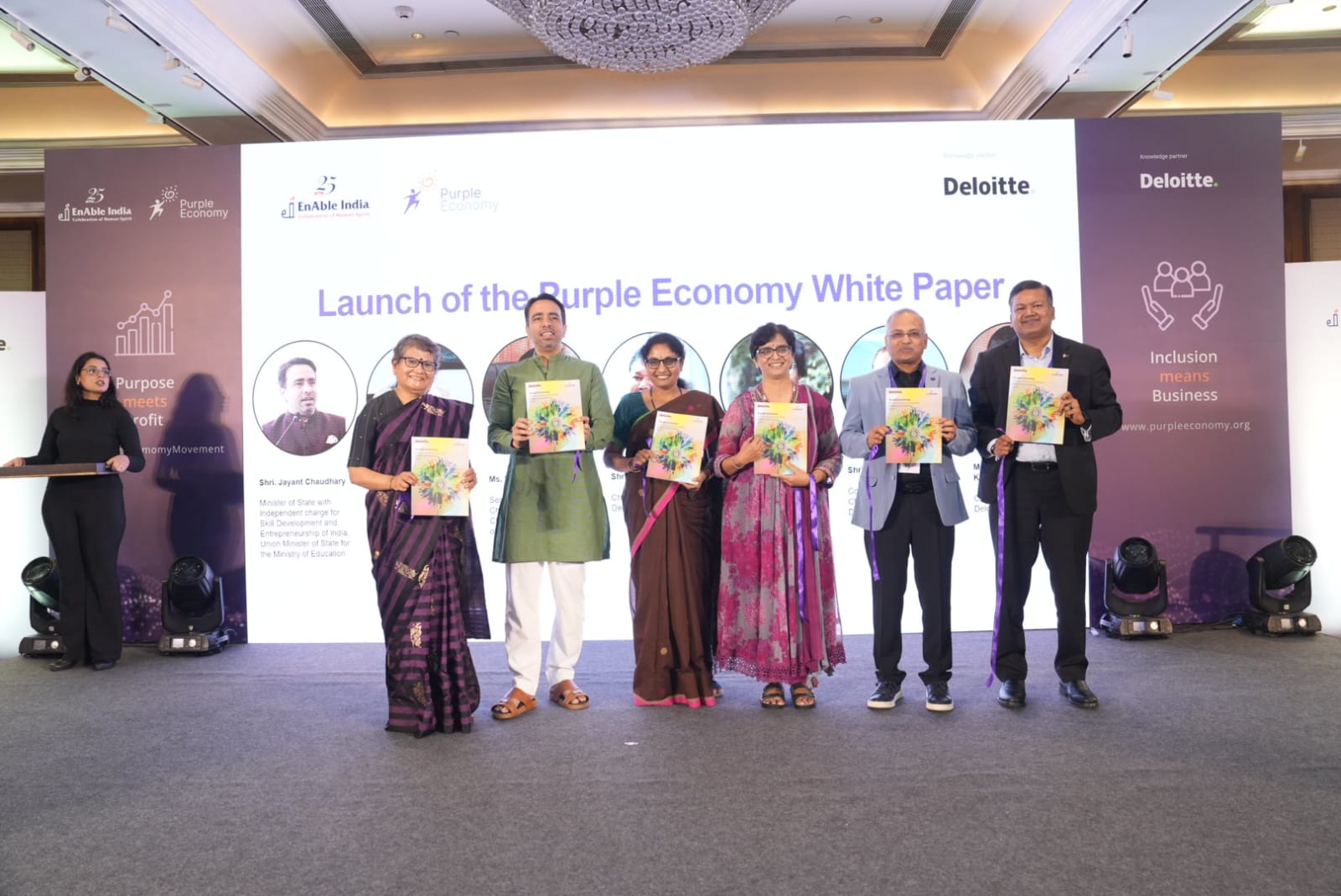
New Delhi, 14 July 2026: India’s next major economic opportunity may not lie in creating a new industry, but in recognising and unlocking one that has long existed in fragments. Deloitte, along with EnAble India, today launched the Purple Economy White Paper, positioning disability inclusion as a national economic growth agenda. The report argues that when the unmet needs, aspirations and participation of persons with disabilities are recognised at scale, they open new markets, better services, inclusive infrastructure, jobs, livelihoods and enterprises for the entire economy. By turning barriers into innovation signals and participation into value creation, the Purple Economy can support India’s vision of Viksit Bharat 2047.
The Purple Economy is an economic framework that recognises persons with disabilities as customers, workers, entrepreneurs, innovators, taxpayers and contributors to growth — and treats accessibility and inclusion as drivers of market creation, productivity, dignity and shared prosperity.
It estimates India’s Purple Economy at nearly US$150 billion and notes that persons with disabilities and their households represent an estimated US$18 trillion consumer market globally, making them one of the world’s largest underserved consumer constituencies. It argues that disability inclusion should move beyond welfare, CSR and compliance to become an economic priority for governments, businesses, investors and public systems.
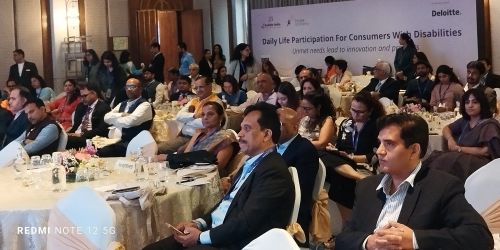
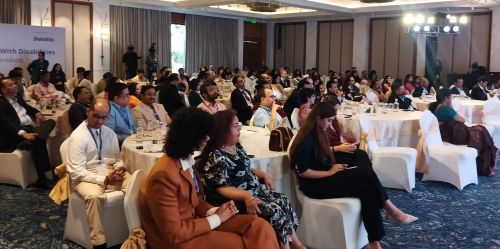
The launch brought together senior leaders from government, industry, policy, finance, technology, skilling, civil society and the disability ecosystem to discuss the role of the Purple Economy in advancing inclusive growth. The event was attended by Shri Jayant Chaudhary, Minister of State (Independent Charge) for Skill Development and Entrepreneurship, Government of India, along with Secretaries to the Government of India, corporate leaders, ecosystem partners and persons with disabilities.
Speaking during the event, Romal Shetty, Chief Executive Officer, Deloitte South Asia, said, “India is at a decisive moment in its growth journey. The Purple Economy challenges us to see disability inclusion not as a cost, but as a catalyst for innovation, market expansion and long-term competitiveness. Businesses that design for inclusion will not only serve society better; they will build better products, stronger talent systems and more resilient markets. This white paper is a call to action for industry to move from intent to implementation.”
Shanti Raghavan, Founder and Managing Trustee, EnAble India, and Chief Architect of the Purple Economy, said, “Healthcare systems expanded the ability of people to recover, function and contribute. The Purple Economy asks us to build a similar enabling architecture around disability one that supports participation through every life stage of a person with disability. From education, skilling and work to retail, hospitality, travel, finance, technology and public services, every unmet need is an innovation signal. When we design systems that improve daily participation for persons with disabilities, we create better quality of life not only for them, but for all citizens.”
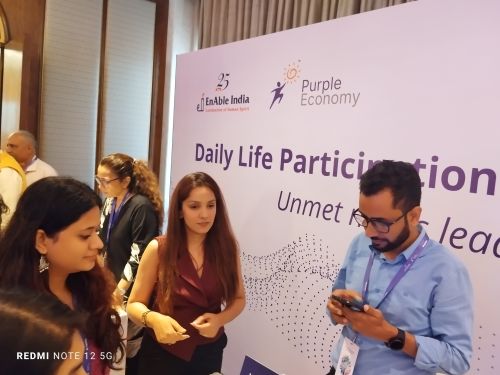
Dipesh Sutariya, Co-founder, Trustee, Chairman and Managing Director, EnAble India, said, “For over 25 years, EnAble India has worked with persons with disabilities, families, employers, communities and governments to unlock livelihoods, dignity and participation. The Purple Economy is the next evolution of that journey. It gives India a way to move from individual success stories to population-scale systems change. The White Paper introduces powerful ways of seeing this shift — including the Purple Delta, which helps us understand the gap between current participation and possible participation, and the Purple Economy Flywheel, which shows how access, demand, innovation, livelihoods and markets can reinforce one another. This is an invitation to government, industry, civil society and markets to move from isolated good practices to shared economic architecture.”
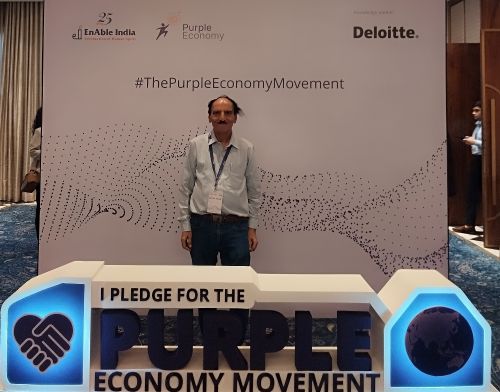
Saraswathi Kasturirangan, Chief Happiness Officer, Deloitte South Asia, said, “The Purple Economy is ultimately about expanding participation. When people can learn, work, access services and contribute without barriers, organisations become stronger and economies become more resilient. Inclusion is not simply about creating equitable workplaces. It is about redesigning systems so that talent, aspiration and innovation are never limited by accessibility. This white paper encourages leaders to view inclusion as a long-term business advantage and a driver of sustainable growth.”
The White Paper also draws lessons from history. Just as healthcare systems expanded people’s ability to recover, function and contribute, and digital public infrastructure transformed access to services, payments and opportunity, the Purple Economy calls for systems around disability to evolve into a growth architecture — one that enables participation across life stages, sectors and geographies.
It further proposes the Purple Economy as an economic framework that recognises persons with disabilities as consumers, workers, entrepreneurs, innovators, taxpayers and contributors to national development. It recommends a National Growth Framework supported by Digital Public Infrastructure, Purple Economic Zones, inclusive market design and cross-sector collaborations to help governments, businesses and ecosystem partners build scalable models for participation-led growth.
The launch also marked the growing momentum of the Purple Economy Movement, initiated by EnAble India. Over the past year, the movement has moved from narrative-building to sectoral activation through initiatives across mobility, digital public infrastructure, skilling, financial inclusion, rural livelihoods, corporate leadership, public service delivery and ecosystem collaboration.
These initiatives include Purple Economy Dialogues with government, industry and ecosystem leaders; Purple Rides, which explores accessible mobility as a pathway to participation; OPuN, the Open Purple Network, as a digital discovery and participation layer; early work on Purple Economic Zones; public-system collaborations; sectoral conversations across finance, insurance, mobility, technology, tourism, education and skilling; and corporate collaborations such as Prernaya, focused on enabling women with disabilities through skills, internships, mentorship, career pathways and community.
Neeraj Krishnan, Head – Purple Economy Movement, EnAble India, said, “The White Paper is not the beginning of the Purple Economy. It captures a movement already in motion. Over the past year, we have taken the Purple Economy into conversations with government, corporates, technology platforms, mobility players, finance, insurance, tourism, public systems, skilling and civil society. Through initiatives such as Purple Rides, OPuN, sectoral dialogues, and public-system collaborations, we are beginning to see how disability inclusion can move from intent to implementation. Purple Economic Zones are especially important because they can become live laboratories for the Purple Economy — places where accessibility, livelihoods, enterprise, public systems, digital discovery and market access come together in one geography. The next step is to convert these early signals into scalable models, sector playbooks and adoption pathways for India and the world.”
The white paper identifies banking and financial services, healthcare, education, mobility, retail, tourism, technology, skilling and public service delivery as sectors with significant potential to benefit from the Purple Economy. It highlights the need to recognise unmet needs as economic signals. Barriers faced by persons with disabilities are not only inclusion gaps; they reveal where markets have failed to design, serve and innovate. The Purple Economy offers a framework for turning these signals into new services, accessible products, inclusive infrastructure, employment pathways, digital platforms and enterprise opportunities.
The launch of the White Paper marks a significant step in positioning disability inclusion as part of India’s long-term economic imagination – not as a parallel social agenda, but as a national growth movement that brings together policy, markets, technology, capital, communities and lived experience.